You must have a big garden. I find that peas - although they do taste fab - take up a lot of space relative to the amount of product I get.
I don’t but I do have the allotment!
I agree. I try generally to grow things that taste better than in the supermarket, and you can’t buy fresh peas that taste like they do straight off the plant. My kids love them and have them like sweets.
2 Likes
I agree that it makes sense to grow things that are better than in the shops. Thats what i try and do. I must say though, that Birds Eye peas take a lot of beating. Just cooked until the water begins to boil and not a single second longer.
1 Like
Having worked the “pea season” at Birds Eye as a student (many moons ago) I can confirm there is a 24/7 military grade operation to get the peas frozen within a few hours of harvest. They are also checked for tenderness, ones that were harvested late and fail the test are destined for veggieburgers and the like. 
4 Likes
I always grow a row peas or two even though I don’t get more than I would in a small bag of frozen. They are good for the soil as they fix nitrogen and a few early peas raw in a salad really makes it special.
3 Likes
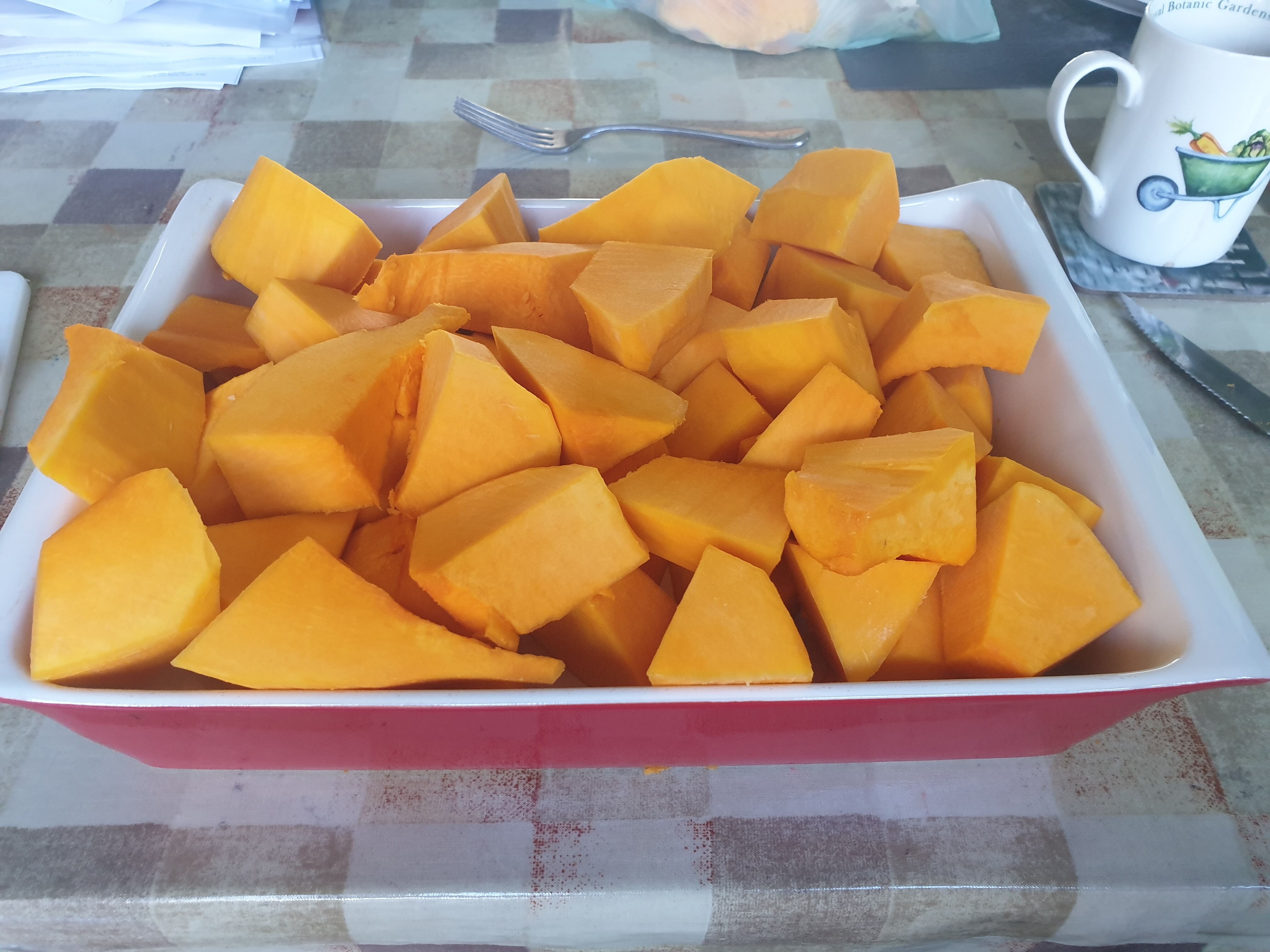
Having the last of our Crown Prince squash from last year. Really nice and tasty we think of these ones, so I’d recommend for anyone thinking of squash. Will also do butternut, pumpkins and patty pan. Below is front on crown prince squash so you may also need a freezer!
1 Like
Thought you had been growing mangos until i read your post !
1 Like
I heard that too !
1 Like
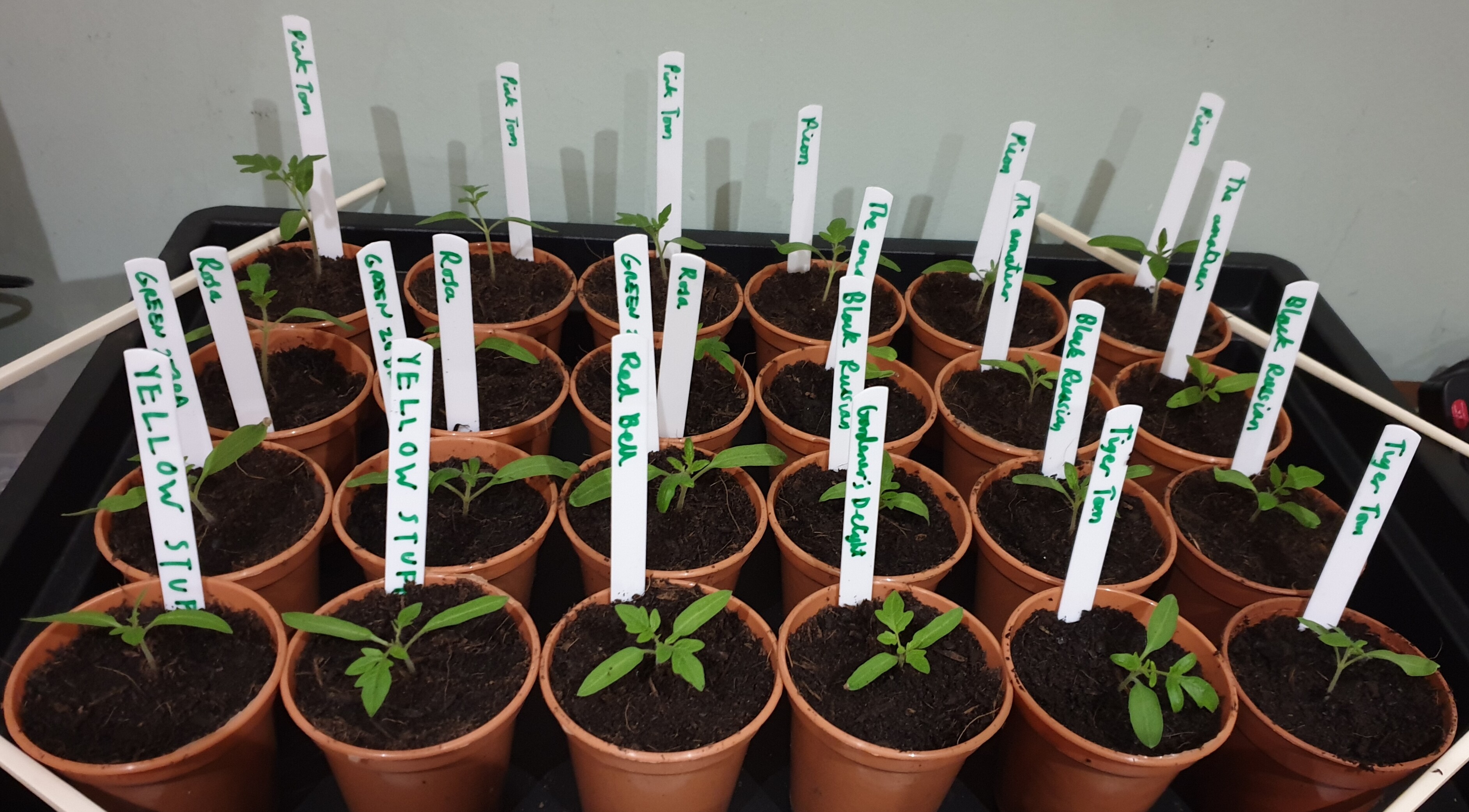
Potted my tomato seedlings on today. Think they got a bit hot and were starting to get a bit leggy so replanted a bit early. Planted to the leaves, the stems will become roots so when repotting your tomatoes always plant up to the first leaves (or higher when bigger of you want).
March and April are pretty busy sowing times, if you’ve not started anything still plenty of time but a good idea to get your seeds now of you have not already for a lot of things.
4 Likes
Well tomato seedlings have come on loads:

Having to bring them in each evening as nights still too cold for outside for them.
Row of Spanish peas coming up nicely.
Not planted squash yet, will do next few days. None of my cosmos seeds have come up so might need a fresh packet as seeds were old, or I messed it up.

4 Likes
One of my rhubarb has a flower stalk

Been such odd weather and April so cold at night, really need to be planting my tomatoes out soon but glad I delayed my squash. Am at least leaving these all outside in the plastic greenhouse overnight.
Good news on the rain though as it was so dry before the last week and a bit, bad news the weeds are in full flow!
1 Like
on Gardeners World last week, they said that the rhubarb flowers should be removed. I forget why - is that something you do ?
2 Likes
Not had one do it before, however I suspect it’s to do with putting it’s energy into the flower / seeds instead of leaves / stalks.
I have enough rhubarb though so am going to leave it be, see what it looks like and see what happens after! I’ll not take anything stalk wise off this plant though.
Yes I always remove the flower stalks. Based on similar advice I read ages ago.
Great celebrations here. After 7 years wait i have been allocated a half plot on the One Tree Hill allotments. Good news eh ?
I went over yesterday to get started and cleared a large black membrane off the top of one half of my plot. What a sight underneath ! - like the surface of the moon, so it is. Someone suggested digging trenches and filling them with horse manure so that is what i have started to do. Back breaking work or what. Here is couple of pictures. The first is of my plot as i found it and the other two is what i did yesterday. Any suggestions of what to do with solid clay (not just clay soil, but solid clay) will be most welcome.


1 Like
It’s a beautiful site that has a beautiful view but it is hard work. My mate Annie has a plot up there and sometimes uses the clay to make her ceramics. Not that I suggest you do the same!
Have you thought about no dig? I sort of did it on my old solid clay plot and it worked well but does require a lot of input and dragging bags and bags of manure up the hill is hard work.
You can try clay breaker although you might need a lot of it…
1 Like
Hi I have a plot half way up the hill. It’s not the best time of year to take on an abandoned plot as too hard to dig over. I would just clear the grass/weeds by scalping and pile up to rot down. Buy some pumpkin and courgette plants and dig holes, throw in some compost and they will produce for you if kept watered. Autumn and winter digging and the frost will shatter the clay.
Thanks for your replies Nick and Moth. I look forward to meeting you Moth. I too am half way up the hill so hopefully I will come across you soon. You know the blue shack that is on Dee’s plot, well I am just about 20 m above that and a little over to the right. My name is Tom. I am the ‘new guy’ Rightly or wrongly I have continued to dig deep trenches and am now filling them with horse manure. I see the cool rainy weather as good for digging because I don’t get too hot and bothered and the rain cools me down. Its been very hard work but now it is done. I am going to make some raised beds soon and then get about a ton of compost delivered. That way I can get something growing sooner rather than later. The other half of my plot can wait until the autumn until I do something about it. I will bear in mind the advice of both of you.
2 Likes
I can’t speak for that particular site, but my brand new garden when we lived in the Midlands had been a sheep field on heavy clay till we took it on. No topsoil at all - the house builders having carted off and sold what little there was. Really solid clay. You’d be a lot taller by the time you’d walked across it than you were at the start … platform shoes.
We planted way more than half the space with Kerrs Pink potatoes the first season. I was working with a highly qualified and respected garden broadcaster at the time and he agreed the potatoes were a good idea for breaking and cleaning the ground but said that the potatoes themselves wouldn’t be usable because they’d be riddled with wireworms.
Whether we were just lucky I don’t know, but we didn’t have a single wireworm. The potatoes were brilliant - best roasts ever - and kept amazingly well in the garage.
The part of the garden that hadn’t had that first season potato treatment always looked a bit of a poor relation in comparison.
Mind you, it wasn’t as rainy as this current season.
2 Likes
Good luck with your new plot. You can do plenty this season.
My plot on another local site had parts of very heavy clay. Impenetrable in summer, completely claggy in winter. I don’t hold that potatoes break the ground up, it’s elbow grease of digging that does that, as you are finding.
The best thing we have done about the clay areas is to put as much horse manure on the top as possible and let it rot down over winter while the worms work it in before turning it over. It doesn’t matter much if it is rotted down or not, as you are just leaving a top dressing - maybe 4 inches or as much as you can get your hands on. These days I fill the car up with free bags from Dulwich stables from time to time and fill a compost heap up in the summer, then use it , rotted down, the following season. .
We did this on sections we were not using, or lacked the capacity to reclaim. Over time (about 16 years so far) we have massively improved the soil doing this, Now we add rotted horse manure to about a quarter of the plot each year to keep the process going. The enriched area is perfect for food hungry plants like Courgettes and squashes, which will happily grow in raw compost , then in ensuing years we rotate that space to less demanding crops like potatoes.
We keep a record of what grew where and which part was enriched, so that we can keep a rough crop rotation going.
I’ve also built a few raised beds, a couple with covers, and have to say the productivity out of them for things like carrots, broad beans, sweetcorn, broccoli and parsnips has gone through the roof.
As an alternative, two friends took over a similar plot and went for the big investment, which was raised beds, avoiding the clay altogether. It suited their busy lifestyle and took them into very productive allotmenteering in their first season.
1 Like