Seasonal aircraft noise /flight path update Part 2- London City. City airport flies low over us in east wind conditions - such as the past 5 days or so, and frequency is well down on peak in 2019 for obvious reasons. But they expect to come back strongly.
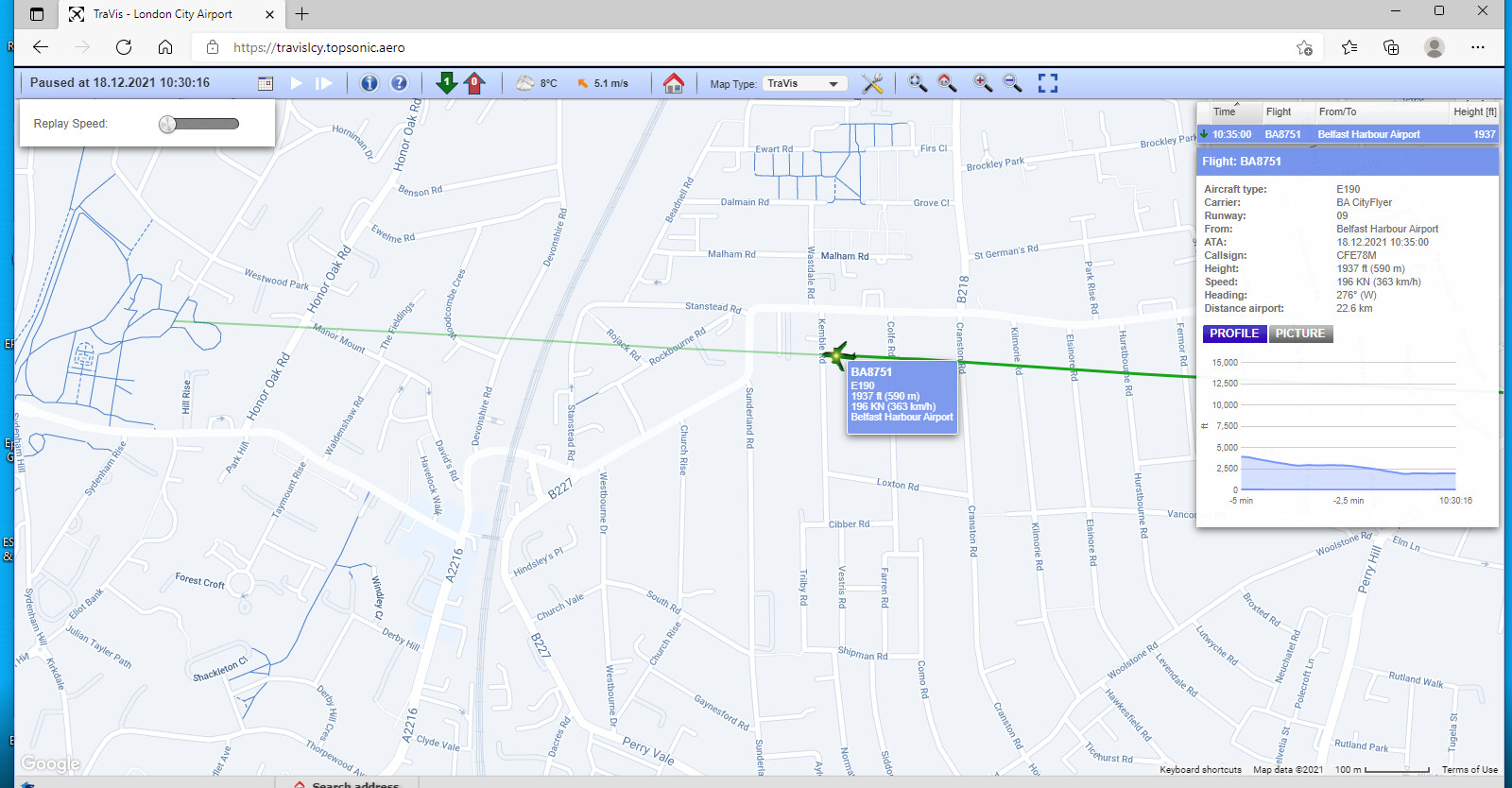
The SE23 problem is that they fly a noisy single track and accurate line at 1600-2000 feet directly through SE23, over the same homes every time. They designed this arrivals path in 2015 against minimal protest, since they gave this concentration of flight paths minimal publicity.
As with Heathrow, London City now have to redesign all paths, both takeoffs and landings, and there is a chance that the SE23 situation will improve. These are the Design Principles agreed with the CAA. Forest Hill Society made strong representations into the Design Principles. We did not get everything we wanted agreed, but there are some hopeful points.
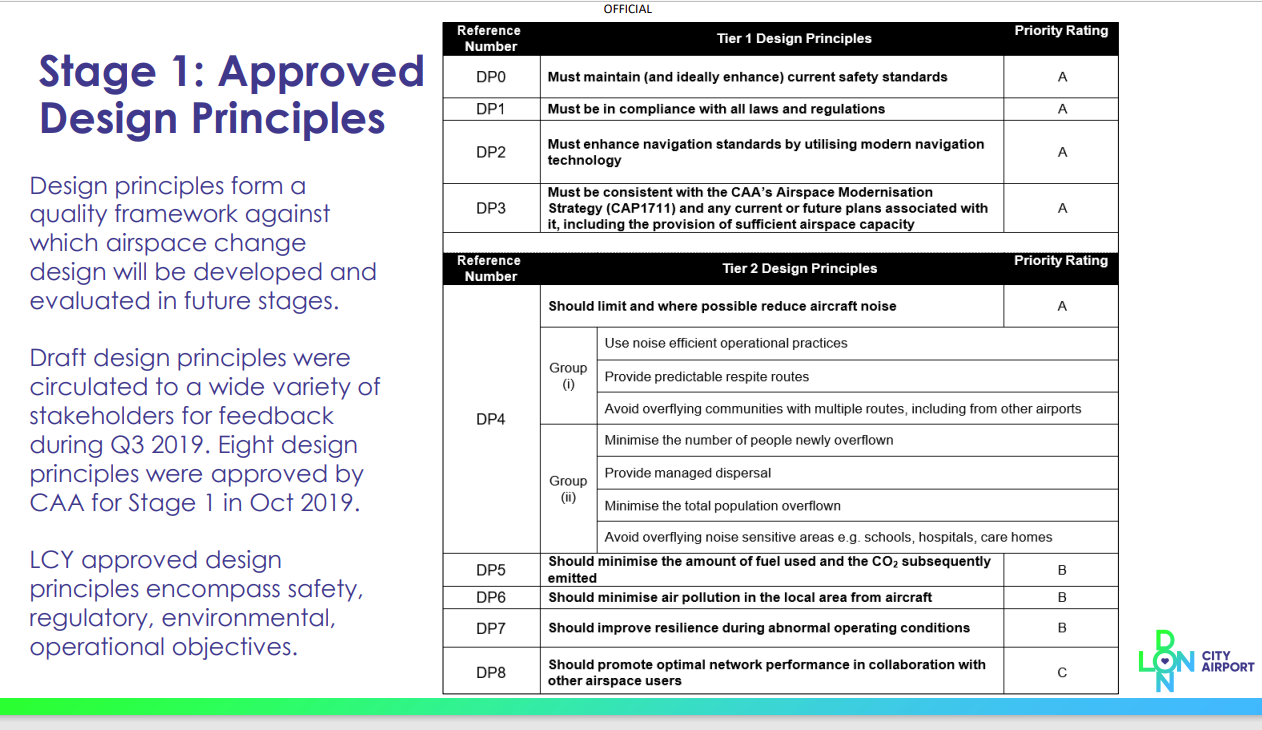
’Avoid overflying communities with multiple routes, including from other airports’ is key. Because we have something similar recently agreed by Heathrow. So in theory they must work together to stop SE23 being under both of their arrivals routes. We’ll see; this is going to take some time.
We did not persuade them to commit to a Continuous Descent Approach, ie stay much higher for much longer. This, we think , is because as their CEO said a couple of weeks ago ‘We need Heathrow to lift their lid’. That is bad news. Making altitude and noise improvement by City airport conditional on Heathrow flying higher is the start of an airport blame game we do not want to see.
One commitment in the Design Principles should bring respite for SE23. ’Provide predictable respite routes’. London City is ahead of Heathrow in the airspace design process, and I and their Consultative Committee have very recently had advance sight of some very early draft route designs. City are clearly considering a second flight path over SE London, which would enable their flights over SE23 to be alternated between two paths in some way - effectively halving their traffic for those living under the current path. Good news for some, but perhaps less so for others.
But if they can combine the extra paths with flying higher for longer and create air space where they do not cross flight paths with Heathrow over the same communities that would seem to me to be as good an outcome as we can get.
So campaigning wise, we don’t have anything to shout about at the moment, but I’m sure there will be a massive bunfight when all of this goes to public consultation! As I mentioned in my update for the Forest Hill Society, we should expect LB Lewisham to be helping to fight our corner when needed, as well as MPs Ellie Reeves and Janet Daby.
So seasonal greetings to everyone here who has taken an interest, it has been great to have occasional feedback, it is a slow process and we will continue with discussions in 2022 I’m sure.
