Just for argument’s sake: Who holds a driver’s licence? Had mine since 2003.
I think the pandemic and post-pandemic period will see a rise in private transport. Diesel and petrol engines may be priced out in cities, but traffic will not be disappearing. Our household has one small car which haven’t used much over the past few months, but we’ve had loads more deliveries - probably 90% by diesel vans.
That remains the practice in Lewisham, despite the green-wash virtue-signalling of some councillors.
Interesting comments and ideas here. Perhaps bringing more of a ‘circular’ principle to rail/tube transport extensions in London would help. One of the Orange line successes has been connecting South to East London, for example. Could also see such an approach helping to reduce ‘needless’ car journeys.
1 Like
@Adrian I agree with the concept I used to live in Wimbledon and it was a nightmare to use public transport between FH and there.
Sadly FH isn’t poor enough to get political points for improving the transport (like Lewisham has DLR, Mainline and a bus station - add adding Bakerloo) - or rich enough to influence (Woolwich Arsenal - Crossrail 1 - Wimbledon Crossrail 2). So we won’t see any benefit of the new lines they even think of
2 Likes
Interesting points John - I’m originally from Wimbledon and agree it’s a pain to cross South London. I think a Brockley Interchange was one scheme the Council was looking at, but not sure what became of that.
I think we should campaign for a tramline round the South Circular to connect the radial transport routes.
The Croydon trams are brilliant and they can go round tight bends.
…occasionally too fast, sadly. But they also don’t run on roads do they. Or not usually up steep hills (do the San Francisco ones use cogs?) I can’t see trams and cars co-existing on the South Circular like they do on other European cities’ roads. You normally need at least 2 lanes in each direction.
Strangely enough I just renewed my photo card one (so much simpler these days) and thought that I’m not actually sure I’ve driven since the last time I renewed it. I’ve had my license since the early 90s but it’s very clean and shiny since it’s rarely used. I’d probably want a refresher lesson or two if I had to start driving regularly again! As a cyclist though, I think my road awareness is generally pretty good which is usually the tougher thing to acquire.
The San Francisco ones have moving steel cables that run under the streets. If it’s quiet, you can hear/see the cable moving if you stand directly over it. There are cable stations along the route that wind the cables around huge drums and keep them moving. The cable cars have a gripper mechanism that reaches down and picks up the cable when it wants to move - and the driver (gripman) puts the brake on and disengages when it stops.
Could have sworn blind I had photos of it but here’s the Cable Car museum I went to and saw it running
2 Likes
The Croydon trams run on a closed railway line most of the way though so the land didn’t have to be purchased/taken away from road use - and apparently they now carry more people than that line ever did. Putting in new tram lines costs millions (see Edinburgh).
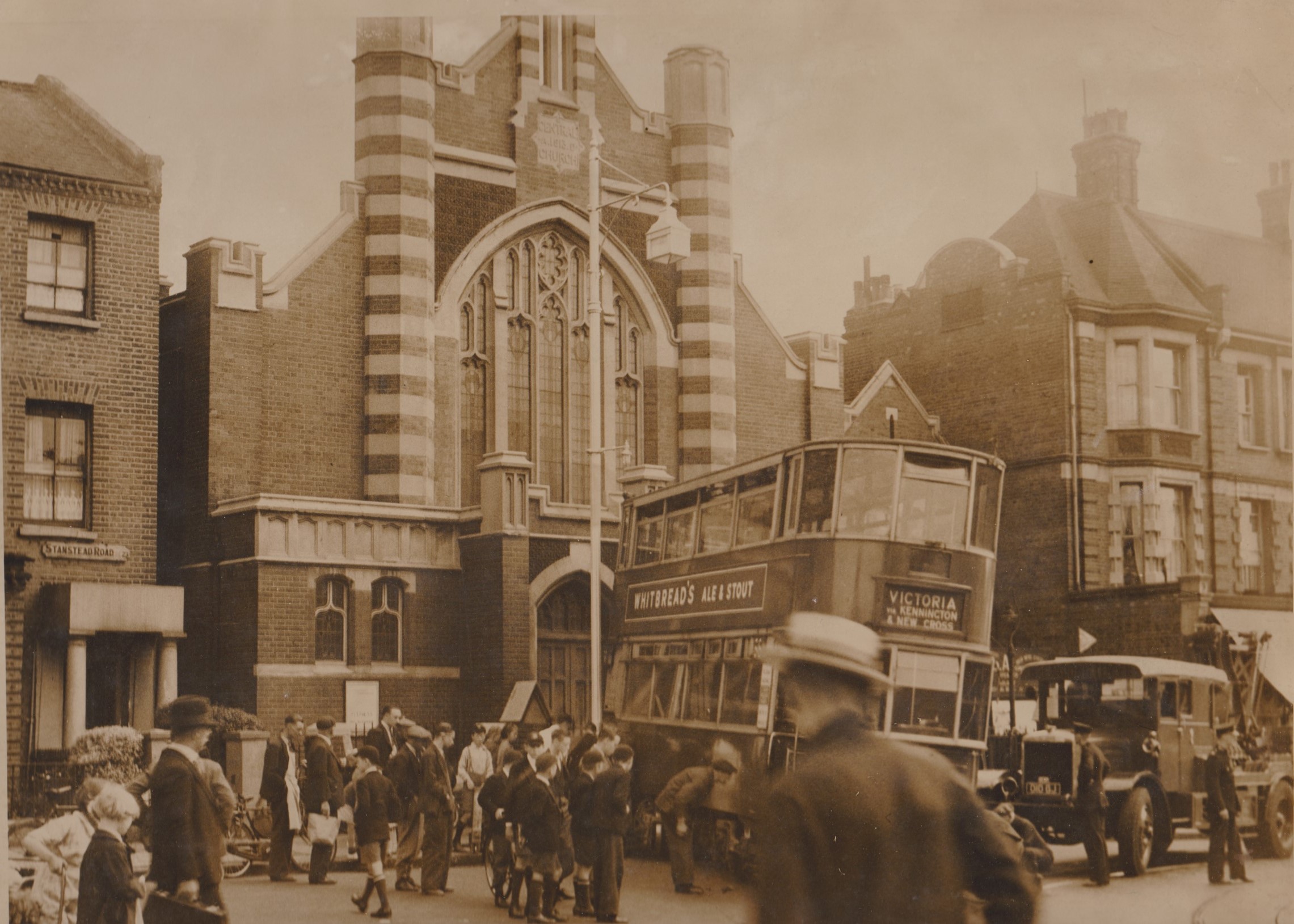
There used to be a trolley bus service to Forest Hill, with overhead electrification. There may even be pictures on this site, but I don’t know where.
Yes but private car ownership was a fraction of what it is now. Also tram lines are dangerous for cyclists hence buses are a logistical replacement. Especially as they move towards electric power
/se23.life/uploads/default/original/2X/0/0f0354a4311c8b23ff59f206e7d1d2e92f929232.jpg
The horniman
/se23.life/uploads/default/original/2X/8/811e63c07e6b6271b6fd9f0bcd88895d49f8786f.jpg
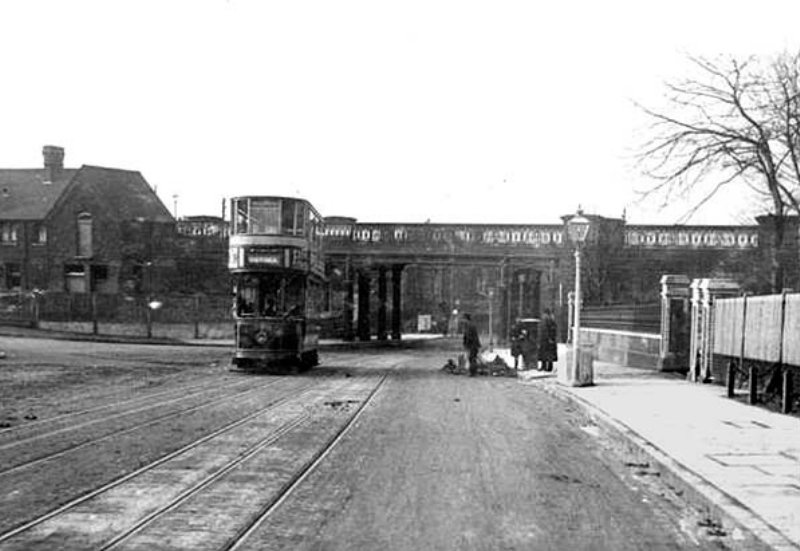
Unsure whether tunnels were a serious suggestion, but they’d be great for Forest Hill (if we have a few hundred million pounds to spend from the appropriate transport budgets - which seems unlikely unfortunately)
Unlike LTN blockages/disruption, tunnels would bring benefits to all residents.
Perhaps if the bypass is built largely under existing roads, it could be constructed using cut-and-cover, which would be cheaper?
Cut and cover wouldn’t be entirely appropriate as part of the design needs to remove the London Road / Devonshire Road junction and straighten the road, and it needs to go under Sydenham Woods, which would have plenty of protests if cut and cover was attempted (but it would be pretty cheap if you didn’t mind the environmental damage and were prepared to reforest the area that was not entirely woodland 150 years ago). Probably better just to spend a few extra 100s of millions.
Given the popularity of LTNs, massive government debts, ultra-low interest rates, and a desire for infrastructure investment, this isn’t as mad an idea as it seems. If the government can reduce interest rates by a few more tenths of a percent, then they can borrow money and make a profit on the negative interest rate - the money money they borrow, the more money they make. But something tells me this is a recipe for long-term economic disaster.
1 Like
The other problem with cut and cover is that it would result in months/years of massive disruption to the high street, which would probably kill off any businesses that weren’t already finished off by Covid lockdowns
Without wishing to dive too far down this rabbit hole, a negative base rate would only be used by the Bank of England to encourage consumer spending. I don’t think negative base rates imply the government would be able to borrow money at negative interest rates (i.e. issue bonds with negative coupons). Bonds with negative coupons are an anomaly that only exists in the rare case that investors think prevaling rates will fall further (and that’s unlikely to happen, as any government foray into a negative base rate is likely to be shortlived)
Quite. A negative base rate would mean The Bank would be willing to pay to lend money in the overnight market.
1 Like
There are several reasons cut-and-cover wouldn’t work:
(i) it would destroy the road it’s intended to replace, before the replacement is ready for use (goodbye South Circular and all who use her: through traffic, local traffic, bus routes, emergency services, local businesses’ stock deliveries; pedestrians);
(ii) the tunnel would be wider than the existing road, so the construction trench would necessitate the demolition of all the buildings alongside the road;
(iii) to build the tunnel at roughly the same level of the road at the tunnel entrance/exit, the trenches through any hills would have to be, what, 20-30 metres deep?
1 Like
Unfortunately we don’t have a public champion of the idea yet. I’m not sure why not, except maybe the general lack of vision and leadership from our political representatives whose best offer is hand-wringing. The channel tunnel was regarded as crazy but now no-one remembers life without it. If Forest Hill was a town centre out of London, there would have been a by-pass built decades ago. In urban areas, you have elevated sections or tunnels to choose from.
Private transport is not going away, even if electric vehicles become the standard.