I feel as if I have been goaded back into this conversation because I cannot let such misrepresentation lie.
Known in Labour circles! By that you mean the Chair of Governors at Eliot Bank? Who would have been working with Lewisham Council discussing these proposals for months? They happen to be a Labour member. Jeez.
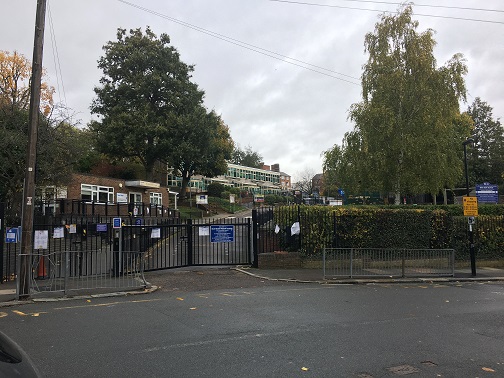
‘Holy Trinity is small, the parents are generally poorer with less car ownership so there is less parent traffic congestion/pollution there and no need for them to be part of this scheme’.**This is somewhat of a misrepresentation. Holy Trinity is smaller, about half the size of Eliot Bank so yes, congestion is less of an issue there.**However, local deprivation level is one of our assessment factors and when only a few Schools Streets could be prioritised, we wanted to target interventions in more deprived and polluted area. Fortunately, with new funding, we can prioritise a wider array of schools if deemed feasible.
‘There is conclusive evidence from Lewisham Traffic and Highways Department against this scheme’.This is simply incorrect.
‘The limited nature of the scheme will just push traffic down the road and make the already very congested bottleneck at Dartmouth road worse. Twice the traffic will now go through this pinchpoint which might lead to more congestion/pollution and gridlock’ The level of eastbound through traffic will stay the same. The level of westbound through-traffic will be reduced to zero - Massively freeing up the entrance of Dartmouth Rd. Yes, residents leaving TA will now exit by Dartmouth Road, but overall, the scheme should lead to a lot less traffic running through TA and therefore a lot less congestion at this junction.
‘The affected residents have not been consulted or given clear information.’ You’re literally being consulted on it now during its trial. If it is to become permanent, it will need to go through a statutory consultation process.
‘Covid Legislation is about social distancing/safety.’ A School Street allows schools to manage arrivals far more easily. A freed-up street scene, and children/parents arriving by foot, allows more space for easier staggered entry. It is much harder to manage children being passed out of cars on a congestion street. I think the school would disagree that this issue has been totally resolved.
‘Why is Holy Trinity School excluded from this scheme when they actively use Thorpewood Avenue and are situated beside the most congested/polluted junction.’ **How many times does this need to explained to you? 1. Dartmouth Rd cannot be closed off for obvious reasons. 2. Holy Trinity have not engaged with a forming School Travel Plan to the extent necessary to be prioritised for a School Street, nor has the School’s leadership shown any interest in wanting a School Street. 3. To close off TA at Dartmouth Round would also mean us making the entirety of TA one way, as we did not have funds for two sets of cameras (and a gate at Derby Hill).**And as I have repeatedly explained if the scheme simply knocks-on congestion and congestions remains at the same level as before, then we will look at amending/scrapping the scheme after or during the trial period. The feasibility of the scheme and therefore why it has been planned the way it was has been repeatedly explained on this thread.
On the matter of evidence. Observations from officers are our evidence base. They deemed Eliot Bank not a priority when we could only trial one or two schemes in the borough but worthy of intervention when we had funds to run more trials. Their observations were based on resident’s complaints, on feedback from schools and their School Active Travel plan involvement, on several observation visits (not just the one I attended), on the traffic volumes and speeds, on pollution levels, on pavement width and pupil numbers, and on the feasibility of a closure.Opinion, you might call it.
You claim you do not support the School Street because there is no evidence for it, yet you dismiss it with ZERO evidence and claim that it won’t work. At least our officers have an evidence base that helped formed their opinion, and I after hearing your points and theirs - I believe their judgement and their arguments have more weight, and that this trial, should go ahead. I am elected to make those calls.
Time and time again there is a crowd that opposes any trial of any traffic intervention, if they believe, even without evidence, that it will personally hinder them. They claim no evidence is ever good enough. No reasoning ever strong enough. Observations and expertise of officers and the judgement of elected officials are not enough.
For minor schemes, like individual model filters or School Streets, they want levels of “data” (as if that is a neutral arbiter) collected and a threshold of ‘evidence’ that would simply be unfeasible for a cash-strapped local authority to cover resource-wise… and is unlikely to still satisfy them anyway. It is a transparent way to prevent any traffic-reduction intervention trials and to argue that therefore despite all the observation work, all the assessment made by civil servants based on the criteria outlined in my comments here and to @DevonishForester 5 days ago, they say ‘there is not enough evidence for it’.
We want consultations, but before implementation, so feedback can be made on presumptions. But we don’t want consultations during a trial when the reality of a scheme can actually be viewed.
Call me cynical, but it is almost as if some people do not wish for the trial for fear of it succeeding and benefitting the wider community but burdening them personally.
I am sure this exchange has been thoroughly dispiriting for all parties involved. But I am sure @anon5422159 is happy because has got me engaging on his forum.
Regards,
Leo