Yes there is evidence that some tree canopies which overhang can make NOX pollution worse because it traps the small particles which can’t fly up into atmosphere. But they absorb lots of CO2 so are excellent for combating climate change -don’t chop ‘em down! Some trees like field
Maple and silver birch are better at filtering not trapping pollutants.
If trees were combined with hedges the hedges could filter the pollution first before it has a chance to trap pollution.
If there are no trees on your road, hedges might be better at trapping NOX (but less effective at CO2) so I think the trick is to get both working.
I want to get some research done on this with Kings and I’m finding out if Street Trees for Living have already done some so watch this space.
Thanks @Hedgeways thats really interesting!
Back in the mists of time one of my undergraduate projects was about the street canyon effect and pollutant concentrations, we were looking at PM10 and PM2.5 as well as NOX if memory serves. I should see if I still have the results anywhere! Are there any pollution monitoring stations anywhere in forest hill?
Ooh how exciting! Please come to the meeting on 9th March to tell us more about it if you can.
I’m just a concerned Mum who’s been googling and emailing people-not an expert or scientist. Would be great to have you on board.
There are lots of “diffusion tubes” across London which feed live info into kings map so yes there are ones somewhere in forest hill-not sure what they look like. There is a monitoring station in new cross and we are soon to get one in honor oak which will do lots of research extra research.
It seems futile to make driving easier at the cost of public transport. More cars does not equal less pollution. Every bus that stops there seems to disgorge upwards of 10 people, I would imagine that equates to a significant number of cars off the road.
Surely a better approach is what support do people need to get out of their cars and onto those buses?
What would support you to leave your car behind and get on the bus?
Hi Mjohnstone, that was not what I was suggesting. It is not the fact that there are nearby bus stops, but rather the arrangement of the nearby bus stops and the junction that is the issue.
Glad you asked - a better bus service. The bus service for Forest Hill is noticeably poorer than elsewhere I have lived in London, despite the good road links. It is not the frequency of busses, but the routes they take. Very often the suggested public transport route to get to a destination in South London is via London Bridge rail station.
Everyone loves an example, so take Forest Hill station to Clapham South station. Leaving now, City Mapper suggests:
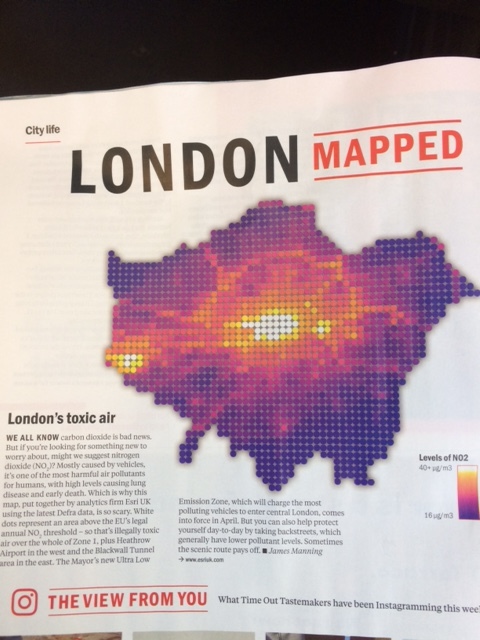
New recommendations on improving air pollution make the news today:
Also, Lewisham Council Voted to pass the climate emergency declaration last week which is very good news. It will help prioritise Clean Air and green issues.
I think that is the point, children would get the health benefits of walking to school and the people living beside the school and the kids inside the school would breathe less polluted air. As a parent I wouldn’t object.
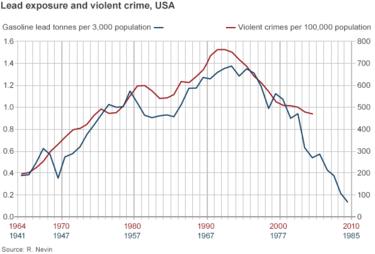
Without hoping to go too far off topic, there’s an interesting (but not particularly unbiased) article on the sad history of adding lead to petrol, and whether the side-effects were initially known or not:
A particularly interesting pair of paragraphs:
Ethyl alcohol had much the same effect and wouldn’t mess with your head, unless you drank it. Midgley knew this, having combined petrol with practically every imaginable substance, from iodine to camphor to melted butter.
Why did the petrol companies push tetraethyl lead instead of ethyl alcohol? Researchers who have studied the decision remain puzzled. Cynics might point out that any old farmer could distil ethyl alcohol from grain. It couldn’t be patented, or its distribution profitably controlled. Tetraethyl lead could.
The same leaded petrol guy also went on to discover chlorofluorocarbons…
The Beeb make a nice history story, but actually I think the paper which the BBC article links to in pretty clear with respect to what it claims (here) - graphs in the appendix mirror that of the @anon5422159 post.
The first sentence of the conclusion in that paper is clear that it finds a relationship in the data, not cause or mechanism of effect:
This paper shows a significant and robust relationship between lead exposure in childhood and violent crime rates later in life.
Other influences are considered too, and to bring things right back to topic, how about this quote from the paper:
Thus, two major acts of government, the Clean Air Act and Roe v. Wade, neither intended to have any effect on crime, may have been the largest factors affecting violent crime trends at the turn of century.
Sounds like lots more research is needed to determine that link. But the link to other issues like asthma, heart disease, cancer, dementia are much clearer.
I attended the Clean Air for SE23 meeting yesterday - thank you Alice for organising, it was very interesting and informative.
Lewisham have a bike loan scheme where you can borrow a bicycle for one month, including gear such as helmet, lock, lights, hi-vis jacket. It doesn’t cost anything, but there is a £10 membership fee to the London Cycling Campaign - mainly to cover insurance.
I’m just coming to the end of my loan and have really enjoyed using the bike.You can also get a free cycling lesson which was brilliant at boosting my confidence on the roads.
I thought I would publicise it here as it appears to be a little known scheme which would be a great boost to those thinking of getting a bicycle.
That’s a gteat idea for starting. I am wondering whether it is worth getting a bike, would I use it enough. Good way to test the theory. Thanks for sharjng. I will look into it.
 ]
]